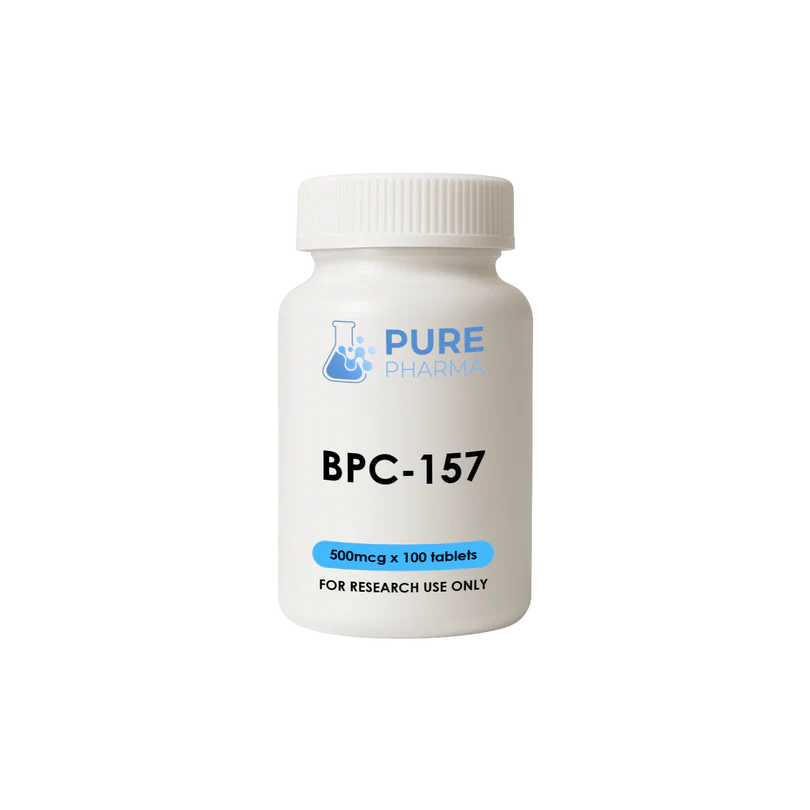
BPC-157 500mcg x 100 Tablets
$220.00
- Free Express Shipping: On all orders over $250
30 in stock
Oral BPC‑157 — Research Context
Administration (Research Use Only) When studied in oral form, BPC‑157 is typically prepared in capsules or tablets. In laboratory settings, oral administration involves passage through the gastrointestinal tract before systemic absorption. This route is associated with reduced stability, as peptides can be degraded by digestive enzymes and stomach acid.
Research Focus Investigators often explore oral BPC‑157 for its potential interactions with the gastrointestinal environment. Research interest includes:
- Stability and degradation pathways in the digestive tract
- Possible influence on gut lining integrity
- Effects on microbiome balance
Systemic outcomes (e.g., musculoskeletal repair) are generally considered less pronounced in oral studies compared to injectable routes, though oral administration remains a subject of ongoing investigation.
Dosage in Research Settings Published studies reference oral ranges around 500–1000 micrograms per day, reflecting reduced bioavailability. These figures are reported in research contexts only and are not intended as guidance for human use.
Pros and Cons (Research Perspective)
| Potential Research Advantages | Research Limitations |
|---|---|
| Simple administration model | Reduced systemic bioavailability |
| Direct GI tract interaction | Slower systemic effects |
| No sterile handling required | Less targeted delivery |
Comparative Research
- Injectable BPC‑157: Often studied for localized or systemic tissue repair due to higher potency.
- Oral BPC‑157: More frequently examined in gastrointestinal models, where direct contact with the digestive tract is relevant.
FAQs (Research Use Only)
- What is BPC‑157? A synthetic peptide of 15 amino acids, derived from a gastric protein, studied for regenerative potential.
- How does it work? Research suggests BPC‑157 may influence angiogenesis, inflammation pathways, and tissue repair mechanisms.
- What are the reported research findings? Studies have investigated wound healing, inflammation modulation, and recovery models in animals.
- Is it safe? Early research indicates a favorable profile, but comprehensive safety data are limited.
- How is it studied? Research protocols include oral capsules and subcutaneous injections, depending on study design.
- Are there side effects? Limited reports exist; some studies note mild gastrointestinal or injection‑site observations.
- Is it used in sports research? Some studies explore recovery models relevant to athletic performance, though regulatory considerations apply.
⚠️ Important Notice — Research Use Only

Product description
Oral BPC‑157 — Research Context
Administration (Research Use Only) When studied in oral form, BPC‑157 is typically prepared in capsules or tablets. In laboratory settings, oral administration involves passage through the gastrointestinal tract before systemic absorption. This route is associated with reduced stability, as peptides can be degraded by digestive enzymes and stomach acid.
Research Focus Investigators often explore oral BPC‑157 for its potential interactions with the gastrointestinal environment. Research interest includes:
- Stability and degradation pathways in the digestive tract
- Possible influence on gut lining integrity
- Effects on microbiome balance
Systemic outcomes (e.g., musculoskeletal repair) are generally considered less pronounced in oral studies compared to injectable routes, though oral administration remains a subject of ongoing investigation.
Dosage in Research Settings Published studies reference oral ranges around 500–1000 micrograms per day, reflecting reduced bioavailability. These figures are reported in research contexts only and are not intended as guidance for human use.
Pros and Cons (Research Perspective)
| Potential Research Advantages | Research Limitations |
|---|---|
| Simple administration model | Reduced systemic bioavailability |
| Direct GI tract interaction | Slower systemic effects |
| No sterile handling required | Less targeted delivery |
Comparative Research
- Injectable BPC‑157: Often studied for localized or systemic tissue repair due to higher potency.
- Oral BPC‑157: More frequently examined in gastrointestinal models, where direct contact with the digestive tract is relevant.
FAQs (Research Use Only)
- What is BPC‑157? A synthetic peptide of 15 amino acids, derived from a gastric protein, studied for regenerative potential.
- How does it work? Research suggests BPC‑157 may influence angiogenesis, inflammation pathways, and tissue repair mechanisms.
- What are the reported research findings? Studies have investigated wound healing, inflammation modulation, and recovery models in animals.
- Is it safe? Early research indicates a favorable profile, but comprehensive safety data are limited.
- How is it studied? Research protocols include oral capsules and subcutaneous injections, depending on study design.
- Are there side effects? Limited reports exist; some studies note mild gastrointestinal or injection‑site observations.
- Is it used in sports research? Some studies explore recovery models relevant to athletic performance, though regulatory considerations apply.
⚠️ Important Notice — Research Use Only
Research Calculator
Calculate your research dosages with precision.
1. What is the total volume of your syringe?
2. Select vial quantity
3. How much bacteriostatic water are you adding?
4. How much of the research compound do you want in each dose?
Result
PEPTIDE DOSE
DRAW SYRINGE TO
YOUR VIAL CONTAINS
200 doses
CONCENTRATION
20.000 mg/mL
Customer Reviews
Be the first to write a review
YOU MIGHT ALSO LIKE
DESIGNED FOR YOUR COMFORT

Australia Wide Shipping
Every order is dispatched within 48 hours via AusPost Express from our VIC warehouse.

High Quality Research Aminos
Produced in GMP-compliant facilities with purity levels of 99 percent or higher.

100% Secure Checkout
All transactions are processed through PCI‑compliant gateways with SSL encryption for maximum protection.

Reviews
There are no reviews yet